THE SHORT ANSWER
Some people gain weight after quitting, but the amount varies widely. Prepare regular meals, accessible snacks, movement and another way to take a break. Do not postpone quitting because an average weight-change figure feels inevitable.
An average is not your forecast
Weight is a real concern for many people who want to stop smoking. It is better addressed with honest numbers and a practical plan than with a promise that it cannot happen.
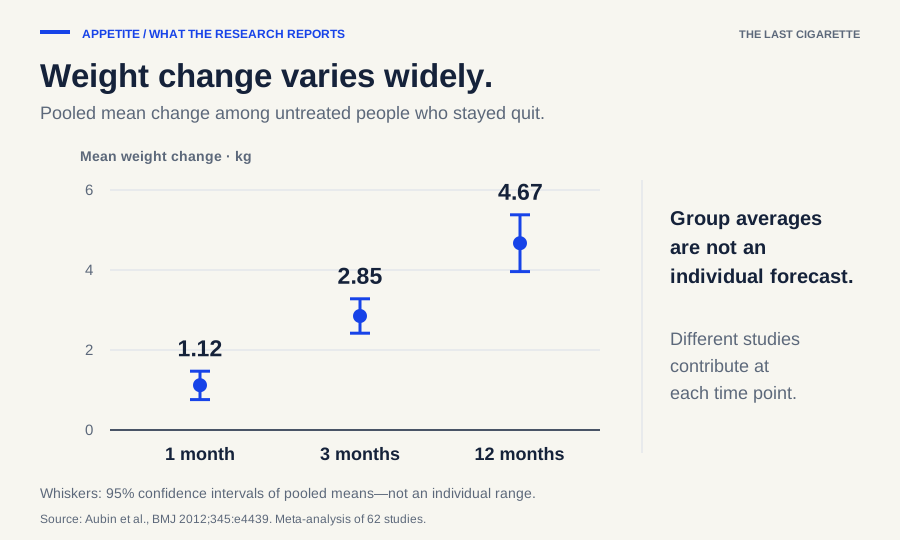
A 2012 BMJ meta-analysis of 62 studies found an average gain of about four to five kilograms after a year among people who remained abstinent. For untreated quitters, the pooled mean was 4.67 kilograms, about 10.3 pounds. Variation was large, and the authors estimated that some people lost weight while others gained substantially more. These were study averages, not a prediction for every person quitting today. BMJ: weight gain after quitting, 2012
That variation matters more to your decision than a single alarming headline. Prepare for appetite changes, but leave room to observe what actually happens to you.
Why eating may feel different
Smokefree explains that appetite can increase after quitting and that the body may burn fewer calories without smoking's effect on metabolism. Eating can also become a substitute for the old smoking routine. Smokefree: managing weight gain
Those are different situations. Physical hunger needs food. Wanting something in your mouth while answering emails may need a different routine. Looking for a break after an argument may need the break itself.
Ask a small, practical question before acting: “Am I hungry, bored, tense or following a familiar sequence?” You do not need a perfect answer. The question helps you choose deliberately rather than treating every discomfort as either a cigarette craving or a demand to avoid food.
If you are hungry, eat. A quit attempt does not become stronger by adding skipped meals and irritability.
Give the day a simple food structure
Prepare the points where convenience usually decides what you eat. If you skip lunch and arrive home very hungry, the evening becomes harder to manage. If the only accessible snack is a large open bag beside your desk, you have made repeated grazing easier than a clear meal.
- Choose a realistic lunch. Something you can actually obtain on a busy workday is better than an ideal meal you never prepare.
- Make a few snacks easy to reach. Use portions that help you notice what you are eating.
- Keep water available. Make it a normal option rather than another task.
- Give meals some attention. Sit down when you can instead of eating continuously while distracted.
These are everyday planning examples. You do not need to adopt a special quit-smoking diet. Start with the change most likely to prevent an uncomfortable, hungry part of your day.
Keep the break even when you do not need a snack
Smokefree recommends movement and ways to manage emotions without cigarettes or automatic eating. Smokefree: appetite, movement and emotions
Make a short list of breaks that are not meals: a walk, music, a shower after work, a phone call or five minutes away from a screen. Pick options that fit the place where the urge happens.
“I will eat the snack I packed before the commute. When I get home, I will take ten minutes to change and sit quietly before starting dinner.”
This separates hunger from the need to decompress. You can address both instead of expecting one handful of food to replace everything the cigarette break used to do.
Choose movement you can repeat, such as walking a familiar route. Turning every craving into a punishing workout can make the plan feel like another obligation. The purpose is a workable routine.
If you track weight, track it usefully
Decide what information would change your next action. An occasional measurement under similar conditions can show a pattern. Repeated checks through the same day are unlikely to tell you whether your quit plan needs a different lunch or more support.
Keep the wider picture beside the number: cigarettes not smoked, meals eaten, sleep, movement and what happens during the hardest break. Do not let a single reading erase progress elsewhere.
If weight change is rapid, substantial or worrying, discuss it with a healthcare professional. If you have diabetes, an eating disorder or a condition requiring a particular food plan, ask for advice that fits that condition rather than adopting generic restrictions from a smoking article.
A useful food plan should support your ability to stay smoke-free. If it leaves you constantly hungry and preoccupied, it may be adding difficulty at the wrong time.
Make the first week easier, then review
Smokefree advises against delaying quitting because of weight concerns and offers appetite, activity and mindful-eating strategies. Smokefree: managing weight after quitting
For this week, prepare one dependable meal, two accessible snack choices and one nonfood break. Review what happened after a few real days. Did the afternoon become easier? Are you still missing meals? Is eating mainly replacing a social ritual or a stressful pause?
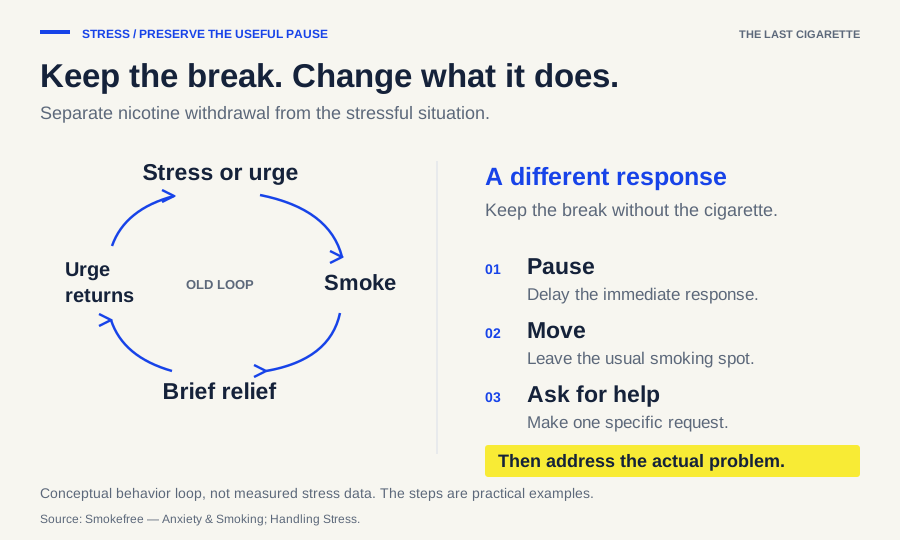
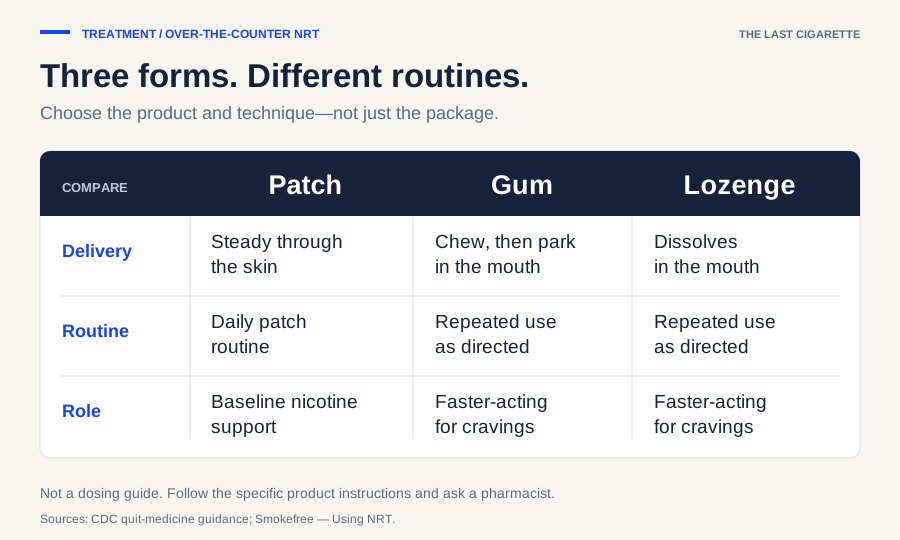
If cravings remain difficult, ask about quit-smoking treatment. Do not assume food planning must solve nicotine withdrawal too. The NRT guide explains common options, and the stress guide helps preserve a break without cigarettes.
Give the plan a fair chance by making it manageable. You can adjust meals and activity while continuing the most important decision in front of you: staying away from cigarettes.
Sources & editorial notes
Published October 28, 2026. Linked public guidance and research checked on that date. Written by The Last Cigarette. Practical scenarios, illustrations and planning prompts are our editorial examples. Source dates below identify research publication, not a promise that an individual will follow an average.