THE SHORT ANSWER
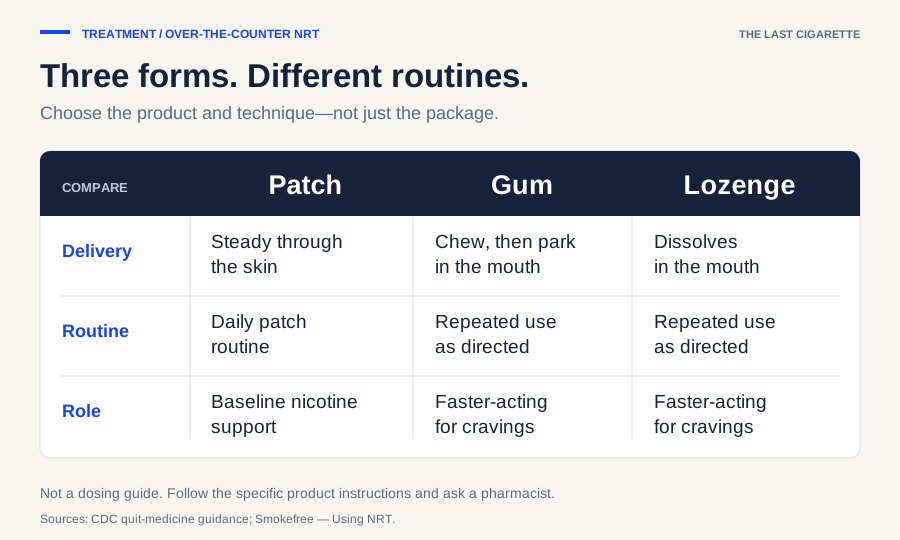
A patch supplies nicotine steadily through the skin. Gum and lozenges deliver it through the mouth and require repeated use. A patch plus gum or lozenges can work better than one NRT form alone.
The main difference is how you use them
Nicotine replacement therapy, or NRT, gives you nicotine without cigarette smoke. It can reduce withdrawal while you stop cigarettes. The choice is not simply which package looks strongest; it is which product, technique and schedule fit your day. Smokefree: using NRT
| Product | How it is used | Practical question |
|---|---|---|
| Patch | Applied to the skin for steady delivery | Will I remember the daily routine? |
| Gum | Chewed slowly, then parked between cheek and gum | Can I use the technique correctly? |
| Lozenge | Allowed to dissolve in the mouth | Can I follow the timing and use instructions? |
The package instructions matter. Two people who buy the same product may get very different experiences if one uses it as directed and the other takes an occasional piece only after an urge has become intense.
A patch: a routine you can prepare once a day
A patch is the longer-acting option. It can be useful when you want a daily baseline rather than repeatedly deciding when to take a product. Gum or lozenges may be added for cravings under an appropriate plan. CDC: combining quit medicines
Think about the practical setting. Where will you keep the box safely? What will remind you to use it? Where will you check the instructions? A product that sits unopened in a drawer cannot help you follow the plan.
Ask a pharmacist about the correct strength, duration, application and what to do if it irritates your skin or affects sleep. Do not cut patches or add extra ones based on a general blog article. A familiar brand name is not a substitute for reading the specific product's directions.
If you work changing shifts, describe that when asking about the routine. A clear schedule should fit your actual waking and sleeping hours.
Gum: technique makes a difference
Nicotine gum is not ordinary chewing gum. CDC describes a slow chew followed by “parking” it between the cheek and gums, then repeating as the tingling fades. Eating and drinking also have timing restrictions in the product guidance. CDC: how to use nicotine gum
Ask someone to explain the technique if the instructions feel unclear. Chewing rapidly because you want the craving gone faster is not the intended method. If it feels unpleasant, first check how you are using it rather than concluding that every NRT option is unsuitable.
Dental work can affect whether gum is a convenient choice. Mention dentures, caps or bridges to your pharmacist and ask about alternatives if needed. Keep used and unused nicotine products away from children and pets; follow the disposal instructions on the package.
Lozenges: dissolving is part of the method
A nicotine lozenge is allowed to dissolve rather than chewed like candy or swallowed whole. Read the instructions on positioning, eating and drinking, frequency and maximum use. Smokefree's overview identifies it as an over-the-counter form of NRT. Smokefree: NRT forms
Think about when it would fit your day. Long meetings, speaking continuously at work or regular meals may affect the routine you can follow. Bring those details to a pharmacist. Convenience matters because a plan only helps when you can use it consistently.
Do not switch strengths by comparing the number on a gum box with the number on a patch box. They describe different delivery methods and schedules. Ask how to choose, use and taper the actual products you intend to buy.
Why people combine a patch with gum or a lozenge
The patch provides a baseline while a faster-acting form addresses cravings. A 2023 Cochrane review found high-certainty evidence that combination NRT leads to more long-term quitting than one form alone. It studied quitting at six months or longer; it was not a test of immediate relief from a single craving. Cochrane: best ways to use NRT
For the numerical comparison and an explanation of relative improvement, read our guide to quitting with support. The important next step is to ask whether combination treatment fits you and obtain clear instructions for both products.
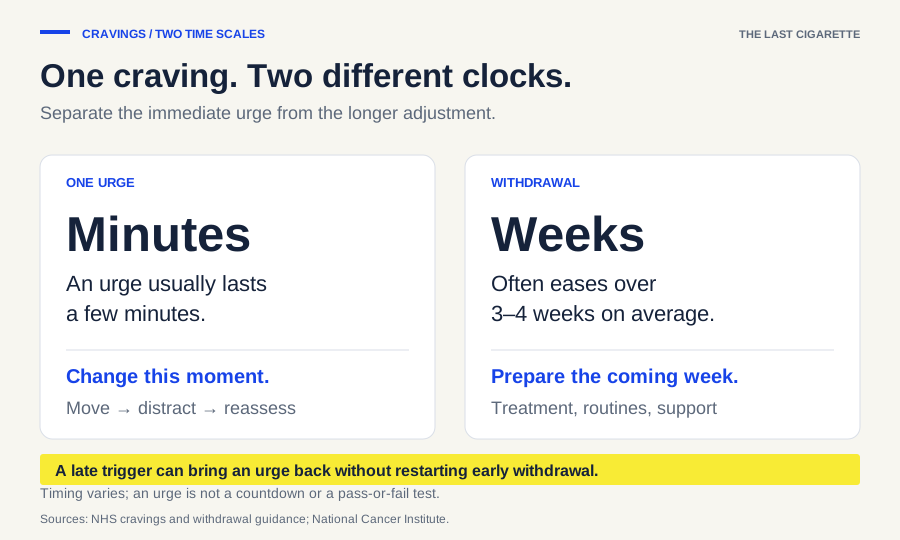
If cravings continue, ask about technique, frequency and suitability. Do not quietly abandon the treatment because the first uncomfortable afternoon feels like proof it cannot help.
Five questions worth asking before you buy
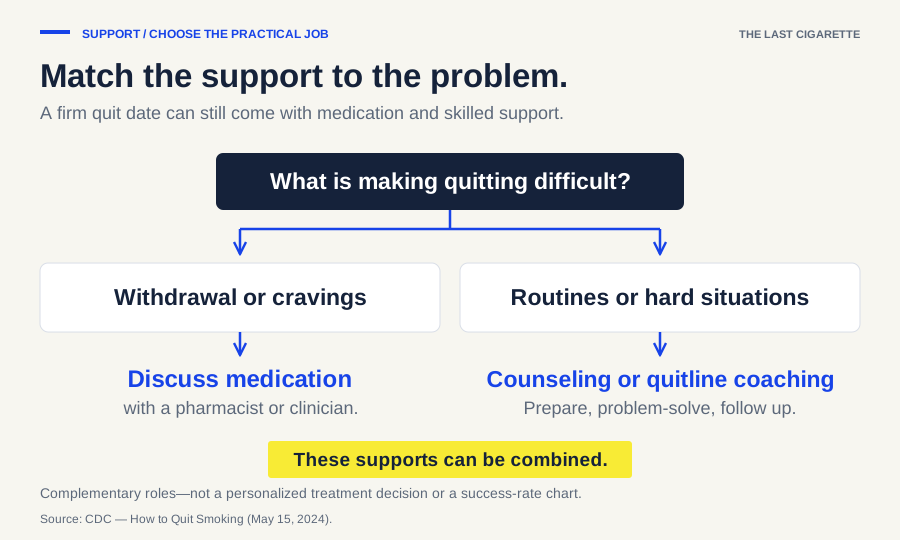
- Which product or combination fits my smoking pattern and health circumstances?
- What strength, schedule and duration should I follow?
- Can you show me the correct technique?
- What should I do about side effects, missed use or a smoking slip?
- When should we review whether the plan is working?
FDA advises discussing cessation products with a healthcare provider when you have relevant medical conditions, take medicines, are pregnant or breastfeeding, or are under 18. Individual product labels contain their own precautions. FDA: cessation products and precautions
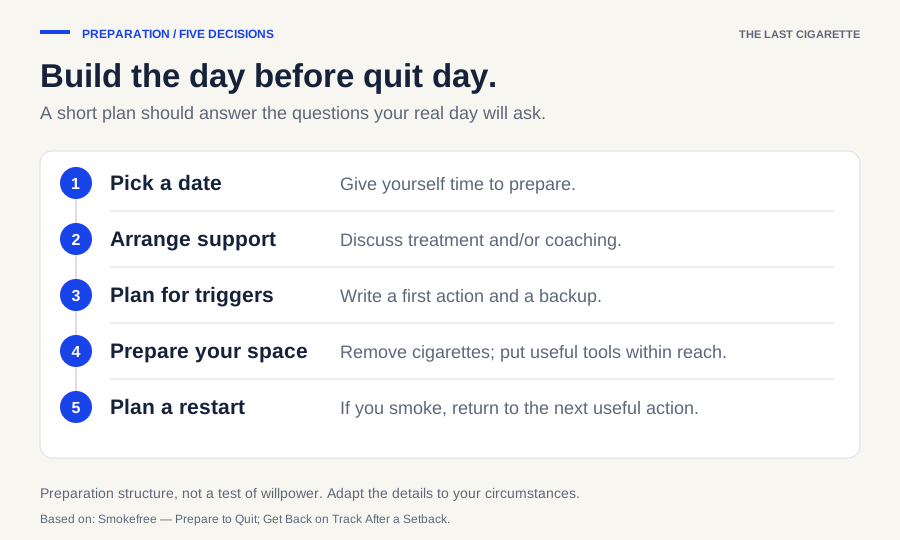
Finally, prepare the routines around the medicine. A patch does not decide where you take your lunch break; a lozenge does not tell your friend not to offer you cigarettes. Use the quit-plan guide to put those parts together.
Sources & editorial notes
Published October 28, 2026. Linked public guidance and research checked on that date. Written by The Last Cigarette. Practical scenarios, illustrations and planning prompts are our editorial examples. Source dates below identify research publication, not a promise that an individual will follow an average.