THE SHORT ANSWER
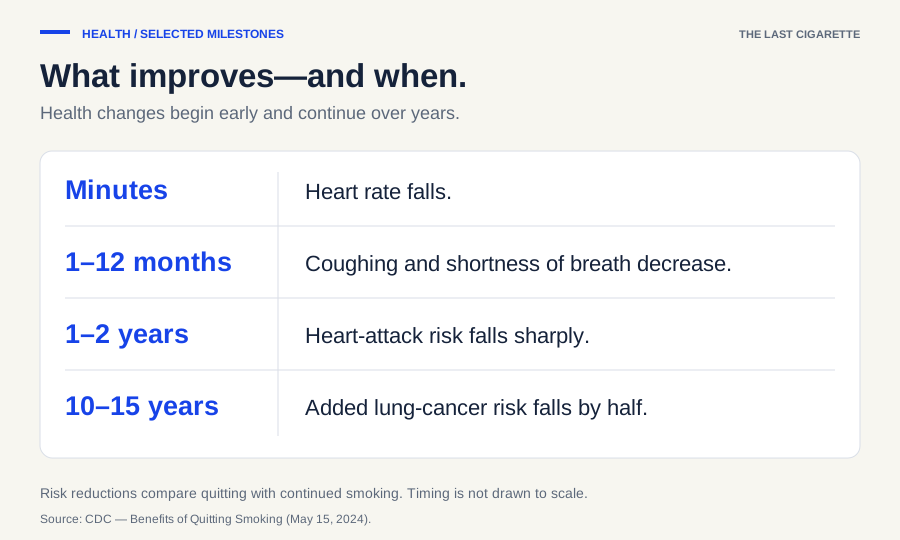
Health benefits begin soon after stopping and continue for years. CDC describes a drop in heart rate within minutes, less coughing and shortness of breath over one to twelve months, and a sharp fall in heart-attack risk over one to two years.
Recovery has more than one clock
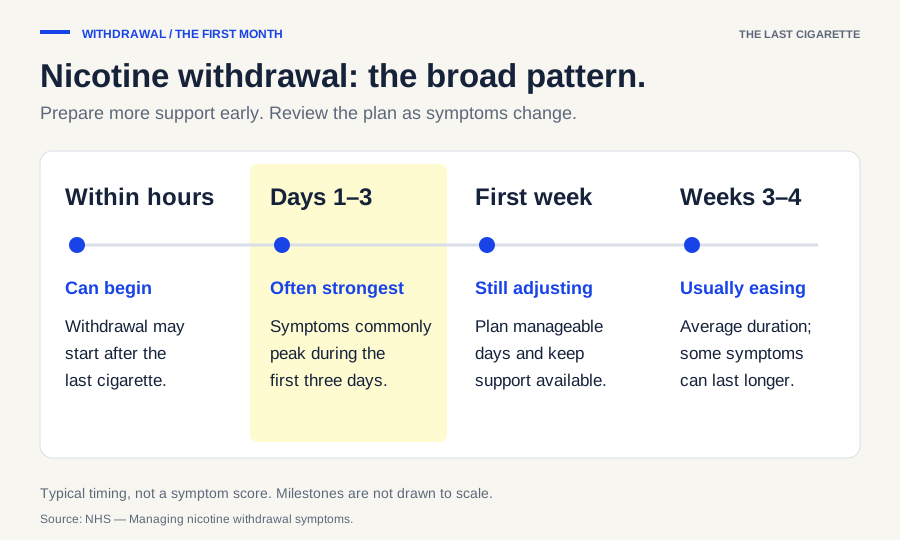
The first week can feel uncomfortable even while quitting is already benefiting your health. Withdrawal describes your adjustment to less nicotine. A recovery timeline describes changes associated with stopping smoking. One can be unpleasant while the other is moving in a useful direction.
CDC states that quitting benefits people at any age, including those who have smoked heavily or for many years. You do not need to find a birthday before which quitting “counts.” CDC: benefits of quitting
Use the milestones below as reasons to continue, not tests your body must pass. You cannot verify a change in disease risk by taking a deeper breath on a particular morning. Long-term risk estimates describe populations, while daily symptoms vary.
The early changes: minutes to days
CDC's timeline starts with a drop in heart rate within minutes. It lists nicotine in the blood dropping to zero after 24 hours and carbon monoxide falling to a nonsmoker's level after several days. The nicotine milestone does not apply in the same way if you are using nicotine replacement or another nicotine product. CDC: health changes over time
That distinction matters. A patch can be part of an evidence-based quit attempt; using it does not erase the benefit of avoiding cigarette smoke. Do not stop helpful treatment just to match a nicotine-free countdown on a website.
For your first days, record behavior you can actually observe: cigarettes not smoked, the first break handled differently, a treatment routine followed or a difficult evening completed. Those records are more useful than trying to infer invisible changes from how energetic you feel.
Months: what may become noticeable
CDC places a decrease in coughing and shortness of breath within one to twelve months. That is a broad window, not a day on which every person should feel a particular improvement. CDC: respiratory milestones
If you want to notice everyday change, choose one ordinary activity and keep the comparison fair. How does the walk to the station feel? Are you stopping as often on the same stairs? Record a brief observation every few weeks rather than testing yourself repeatedly through a single day.
Do not explain every cough or breathing problem as recovery. New or worsening breathlessness, chest pain or other concerning symptoms deserve medical attention. A benefits timeline is encouragement to stop smoking; it cannot diagnose what is happening now.
“Walked the same route to the store today. Needed one stop, compared with two last month.” Record what happened without assigning it a medical meaning.
Years: understand what “risk falls” means
| Time after quitting | Population-level change |
|---|---|
| 1–2 years | Heart-attack risk falls sharply. |
| 3–6 years | Added coronary-heart-disease risk falls by half. |
| 10–15 years | Added lung-cancer risk falls by half. |
| 15 years | Coronary-heart-disease risk approaches that of someone who does not smoke. |
CDC compares these reductions with continuing to smoke. “Added risk falls by half” does not mean your total risk becomes zero, or that half of all former smokers avoid a disease because a timer expired. CDC: timeline and comparison notes
The practical consequence is straightforward: continuing without cigarettes keeps opening the door to longer-term benefit. A milestone can motivate you without becoming an individual forecast.
Make the distant benefit relevant this week
Ten years is hard to care about during a bad afternoon. Connect the long-term reason to a decision you will face today. If your reason is keeping up with your children, your next action might be taking a smoke-free walk with them after dinner. If it is protecting your time, decide what to do with the break that used to end at the cigarette shop.
Keep two kinds of progress beside each other. One is the larger health reason. The other is evidence of your own work: a social event you handled, a morning routine you changed or a week of money you did not spend on cigarettes.
You do not need an impressive transformation photograph to make progress real. A short note written at the end of a hard day can be more convincing to your future self than a generic list of benefits.
Build the conditions for the next milestone
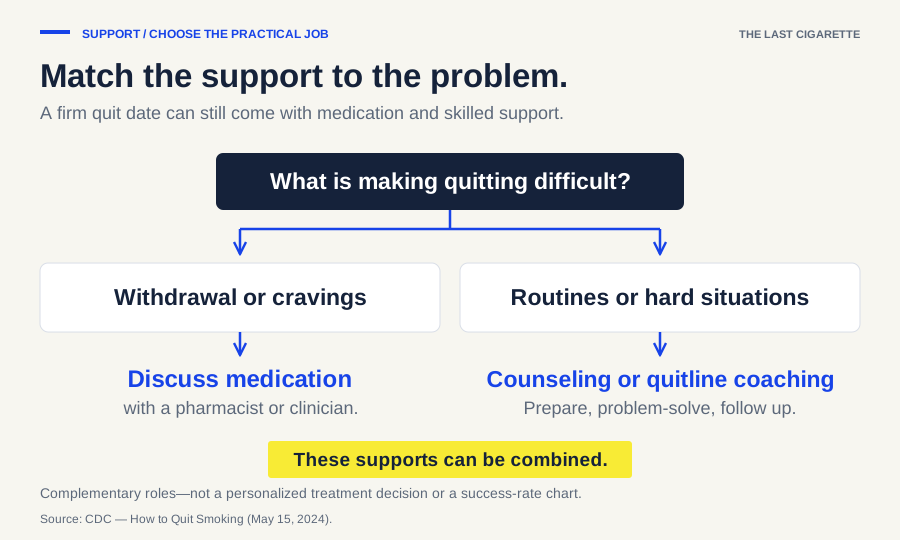
The useful question is what will help you stay smoke-free through your next difficult situation. CDC recommends proven treatment and says counseling combined with medication offers the best chance of quitting. CDC: how to quit
Consider a pharmacist or clinician conversation, quitline coaching and a written plan for predictable triggers. Use our comparison of quitting with and without support to prepare that conversation. If the first week is your main concern, start with the withdrawal timeline.
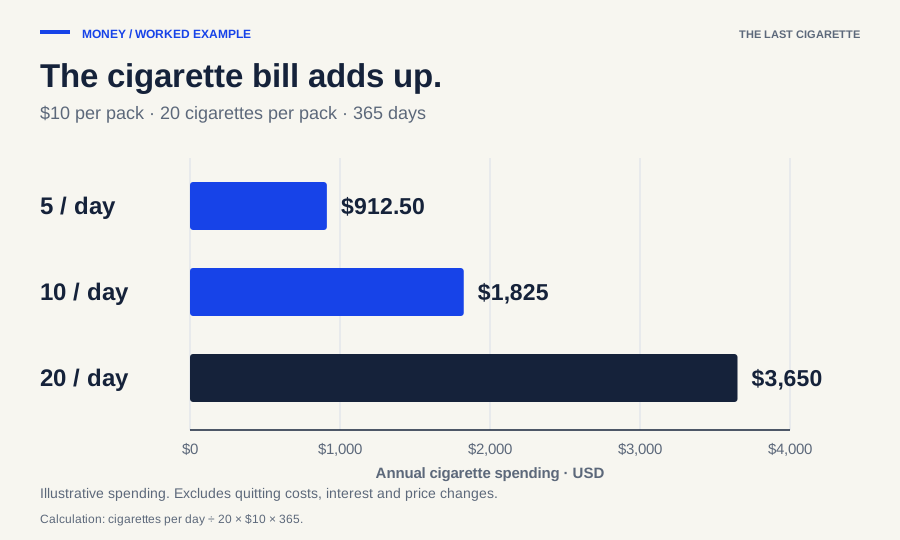
Finally, give your health goal a practical companion. Our smoking-cost guide shows how to estimate the money you could redirect. The health gains take different lengths of time; deciding where tomorrow's cigarette money goes can start now.
Sources & editorial notes
Published October 28, 2026. Linked public guidance and research checked on that date. Written by The Last Cigarette. Practical scenarios, illustrations and planning prompts are our editorial examples. Source dates below identify research publication, not a promise that an individual will follow an average.