THE SHORT ANSWER
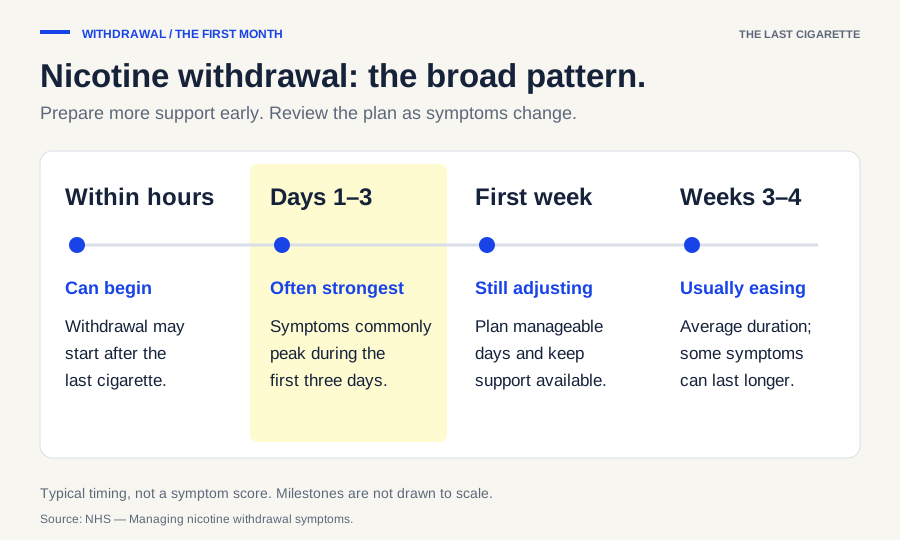
Withdrawal can begin within hours of the last cigarette. Symptoms are often strongest in the first three days, then generally ease. The NHS gives an average duration of three to four weeks, with some symptoms lasting longer.
Use the timeline to prepare your week
A timeline is useful when it changes your calendar. It is less useful when it becomes a deadline for feeling normal. If the first few days may be uncomfortable, you can prepare simpler meals, move an optional social event and arrange a short check-in. You do not have to predict exactly how Tuesday will feel.
The NHS describes withdrawal starting within hours, usually becoming strongest during the first week, particularly the first three days. It gives an average duration of three to four weeks and notes that some people experience symptoms longer. NHS: managing withdrawal
“Symptoms are usually strongest during the first week, especially in the first 3 days.”
NHS, managing nicotine withdrawal
That pattern helps you allocate support. Arrange it early, then review it rather than cancelling everything on day four because a chart says the peak should be over.
The first hours: change the usual sequence
Your first challenge may be a familiar sequence rather than a dramatic symptom. Wake up, coffee, cigarette. Finish a call, step outside. Get into the car, light up. Before quit day, write down the first three sequences you are likely to meet.
Then change something visible. Put breakfast somewhere different. Remove the ashtray from the car. Take your first break with a colleague who does not smoke. These are practical preparation ideas, not rules that everyone must follow.
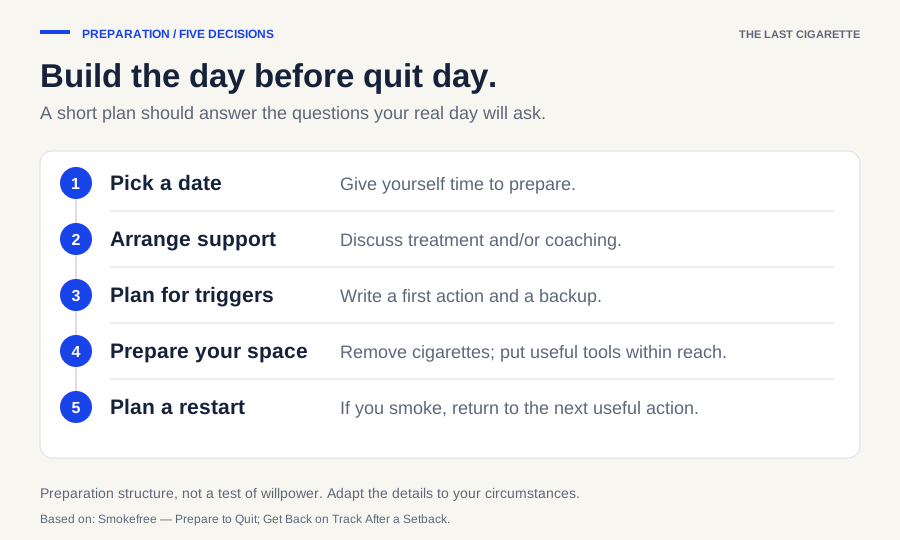
Have your chosen treatment ready before you need it. A pharmacy visit at the moment of a strong urge adds an unnecessary errand. Put instructions, supplies and a support contact in a place you can reach. Leave the first day fewer decisions to make.
Clear cigarettes and smoking cues, choose tomorrow's first break, prepare food and water, and decide who you will contact if the afternoon gets difficult.
Days one to three: lower the friction
Common withdrawal experiences include cravings, irritability, restlessness, sleep difficulty, increased appetite and trouble concentrating. You may have some of these and not others. A list describes possible experiences; it does not prescribe a sequence. NCI: symptoms of withdrawal
Make tasks smaller where you can. Answer one email before opening ten. Take a short walk instead of sitting at your usual smoking spot. Tell the people around you what would help: patience, a smoke-free break, or a reminder to eat lunch.
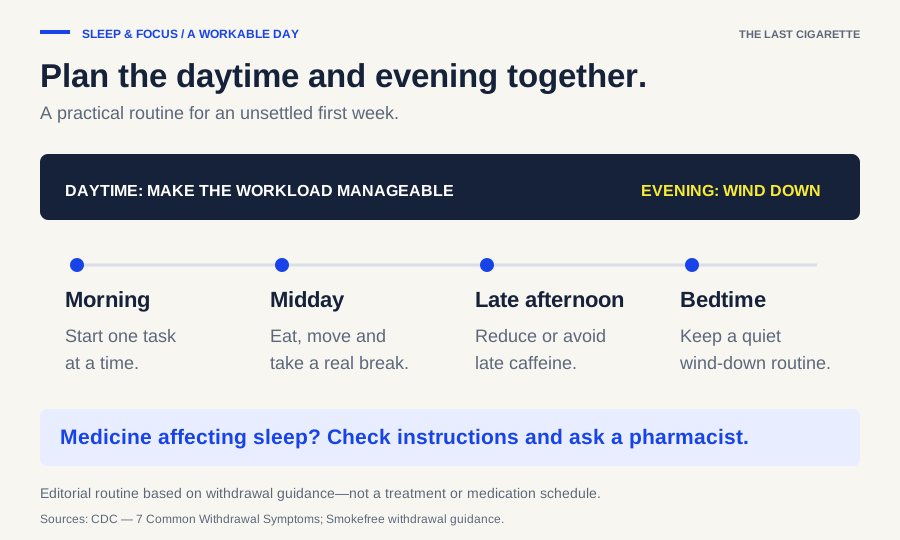
If you normally rely on coffee to push through a difficult day, review that habit too. CDC notes that caffeine stays in the body longer after you stop smoking. A familiar quantity may leave you more jittery or disturb sleep. CDC: common withdrawal symptoms
Try less caffeine or an earlier cutoff and observe the result. The goal is to remove an avoidable source of discomfort while you deal with withdrawal.
The rest of week one: look for patterns
At the end of each day, record one difficult situation and what you tried. Keep it brief: “After the afternoon meeting, walked to the other entrance; easier than yesterday.” A log is most useful when it changes tomorrow's plan.
If every hard moment comes before dinner, check the ordinary details. Have you eaten? Are you exhausted? Are cigarettes still easy to get? Is this the time you usually use your prescribed or over-the-counter treatment? Ask a pharmacist about treatment questions rather than improvising a new dose.
Do not confuse a busy day with a supported day. Filling every hour can leave you tired without solving the one routine that keeps causing trouble. Protect a few regular meals, manageable breaks and a way to ask for help.
Weeks two to four: practice the situations you missed
As the early discomfort eases, new situations still appear: your first weekend away, the first late shift, a birthday, an argument. Smokefree distinguishes triggers associated with emotions, routines, social settings and withdrawal. Smokefree: types of triggers
Choose one upcoming situation and prepare it in detail. If you are meeting friends, decide where you will sit, what you will say when offered a cigarette and how you will leave if you need a break. If your old smoking break was your only quiet time, keep the quiet time and change what happens during it.
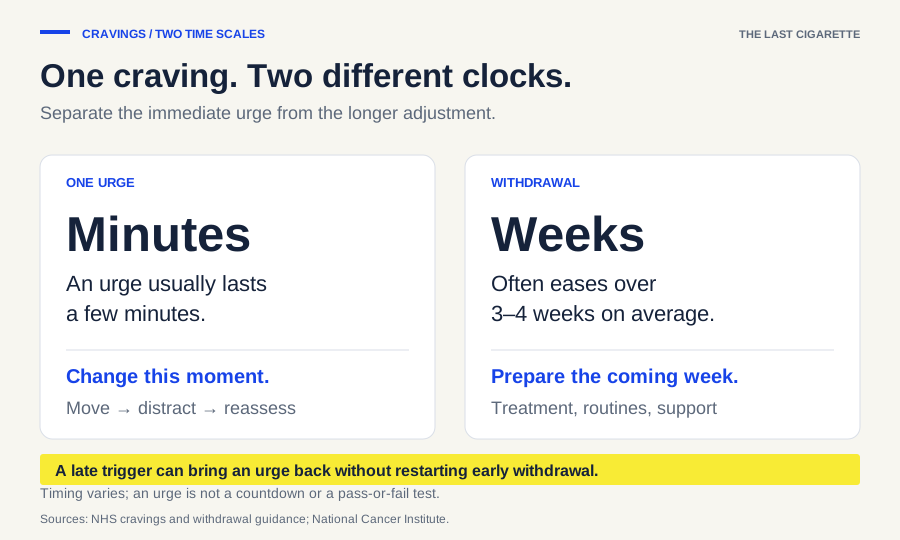
A late craving can feel discouraging precisely because the week has otherwise been better. Read the guide to individual cravings for a response that fits that shorter moment.
When the timeline is not enough
Ask for help if symptoms interfere with your ability to function or feel unmanageable. CDC advises contacting a healthcare provider when mood symptoms do not improve or feel hard to manage, and seeking advice for sleep problems that bother you. CDC: managing mood and sleep symptoms
New, severe or concerning physical symptoms should not be dismissed as withdrawal just because you recently quit. Describe what is happening and get appropriate medical care. A generic timeline cannot tell you the cause of a specific symptom.
For ordinary day-to-day preparation, make the next seven days concrete: treatment if appropriate, three trigger responses and one support contact. Then review. Our quit-plan guide shows how to keep that plan short enough to use.
Sources & editorial notes
Published October 28, 2026. Linked public guidance and research checked on that date. Written by The Last Cigarette. Practical scenarios, illustrations and planning prompts are our editorial examples. Source dates below identify research publication, not a promise that an individual will follow an average.