THE SHORT ANSWER
Sleep difficulty and trouble concentrating are common in early withdrawal. Keep your routine simple, review caffeine, and ask about treatment side effects. Seek advice if sleep or mood symptoms are persistent, severe or interfere with daily functioning.
Treat the first week like a week that needs support
You sit down to work and keep rereading the same paragraph. At night you are tired but restless. It is easy to conclude that smoking was what made you function. Early withdrawal gives you a narrower, more useful explanation to consider.
CDC identifies trouble concentrating and sleep difficulty as common experiences after quitting. It recommends being easier on yourself in the early days and adjusting routines that can worsen sleep. CDC: concentration and sleep after quitting
Plan around the temporary difficulty where you can. Put the most demanding task in the part of the day when you are usually clearest. Use a short checklist. Delay an optional late night. None of that requires deciding you are incapable of your usual work.
If a task involves driving, machinery or another safety-critical responsibility, take impaired concentration or serious sleepiness seriously and make appropriate arrangements.
Review the coffee before adding another cup
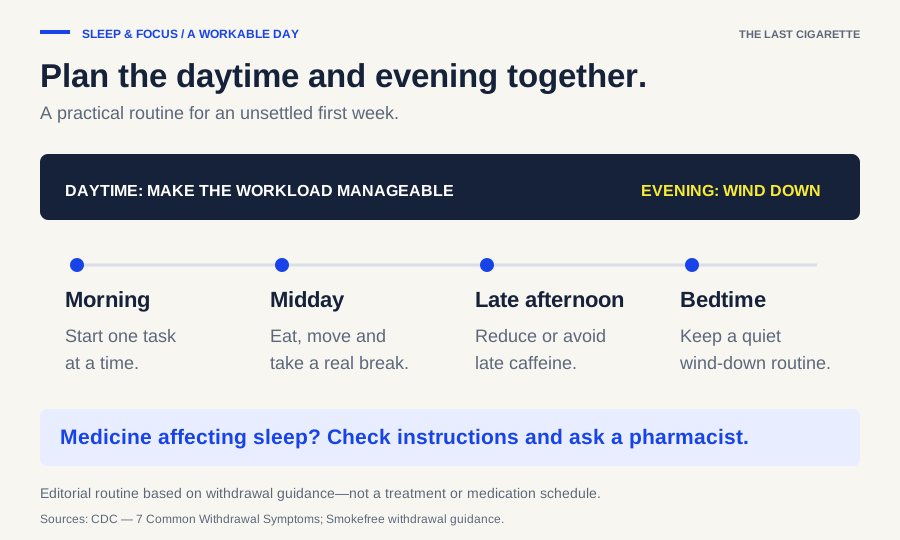
After stopping smoking, caffeine lasts longer in the body. CDC suggests cutting back on coffee, tea and other caffeinated drinks if you feel restless, and avoiding caffeine late in the day when sleep is difficult. CDC: caffeine and withdrawal
A familiar quantity may therefore feel different. Keep the experiment simple: reduce a serving, move the last cup earlier or replace one with decaf. Notice whether you feel less wired in the afternoon or settle more easily at night.
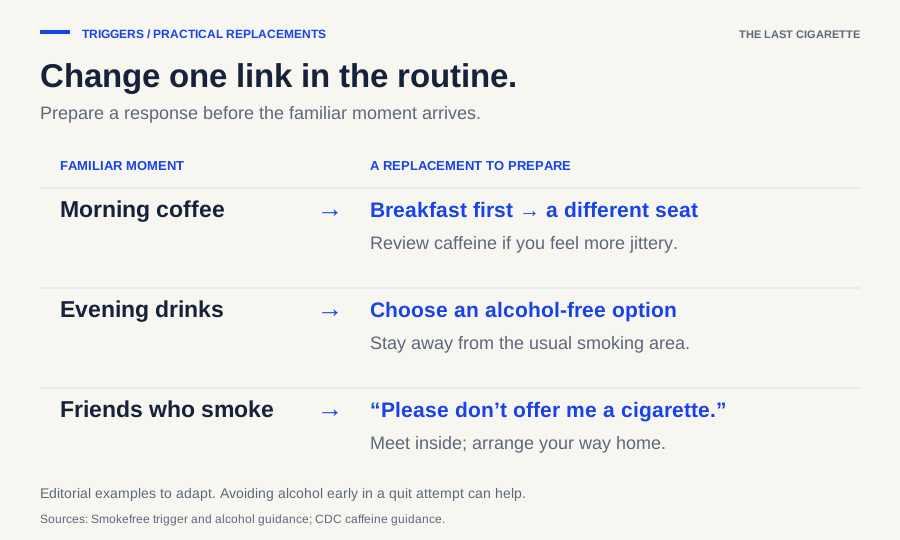
There is also the learned routine. If coffee was always paired with a cigarette, changing its location or timing may help break that sequence. Read the coffee-and-triggers guide for practical examples.
Do not respond to every foggy moment by adding caffeine without looking at the whole day. A short walk, lunch or an earlier bedtime may address a different part of the problem.
Make an evening routine with a clear ending
Smokefree's withdrawal guidance recommends a consistent sleep schedule and a relaxing bedtime routine. It also advises asking a healthcare provider if quit-smoking medicines affect sleep. Smokefree: managing withdrawal and sleep
Choose a few repeatable steps rather than a long ritual. Finish the task you are doing, prepare what you need for morning, dim the activity around you and go to bed at a realistic time. Keep the routine short enough that you will follow it after a tiring day.
Prepare tomorrow's breakfast and treatment supplies. Put work away. Read something undemanding or listen to quiet audio. Keep the morning wake time reasonably consistent.
These are planning examples, not a treatment for chronic insomnia. If you already have a sleep condition, keep your existing care plan and ask how the quit attempt fits it.
Ask about medication instead of guessing
Some people using a nicotine patch experience sleep disruption or vivid dreams. CDC advises discussing sleep problems and notes that people may remove a patch before bed and put on a fresh one in the morning, following the product guidance. CDC: using a nicotine patch
Check your own product instructions and ask a pharmacist before changing the routine. Describe what is happening: when you apply it, when sleep becomes difficult, other medicines and your caffeine use. A clear description is more useful than “This treatment does not work.”
Prescription medicines have their own instructions and precautions. Do not change the dose or timing based on a general article. Ask the prescriber what to do about a troublesome effect and whether the treatment plan should be reviewed.
The aim is to preserve useful quitting support while solving the sleep problem, rather than abandoning one to address the other.
Give concentration a smaller job
For a demanding workday, write the next concrete action before starting: open the document, answer one question, make one call. Work from that short list instead of expecting yourself to hold everything in your head.
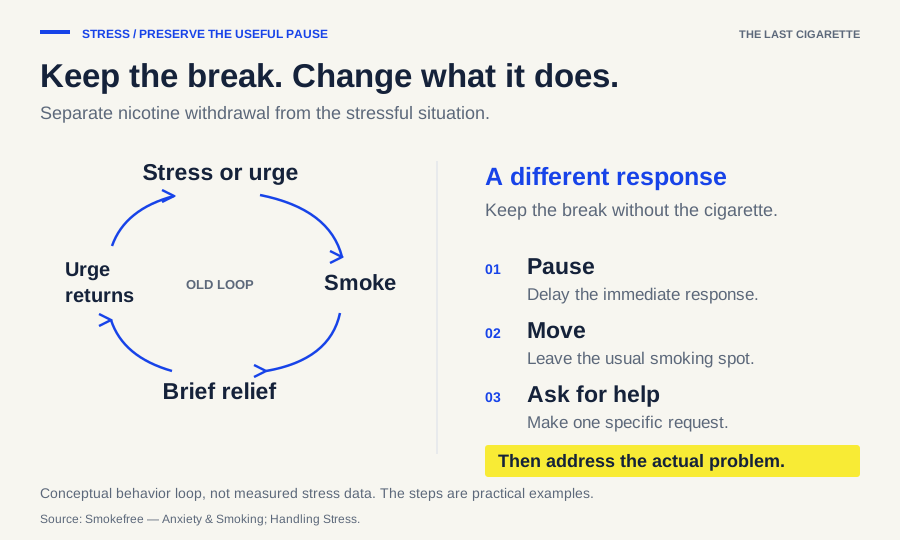
Breaks should interrupt the old smoking sequence. If you always left after finishing an email, take a short smoke-free break at the same point. Return with the next task already written down so that the break does not turn into another round of decisions.
Reduce avoidable switching. Close a few tabs, silence nonessential alerts and keep a note for ideas that can wait. These are ordinary work-design suggestions; they do not diagnose or treat a concentration disorder.
At the end of the day, record one thing that improved the arrangement. Perhaps an earlier meeting was easier, or a walk before a long task helped you start. Keep what was useful and simplify what was not.
When to ask for more help
Do not assume every persistent symptom is withdrawal. CDC recommends seeking advice for sleep problems that bother you, and contacting a healthcare provider for mood symptoms that are unmanageable or do not improve. CDC: when symptoms need attention
Describe the duration, effect on your day, caffeine, treatment and any other symptoms. This gives the conversation a useful starting point. If you feel unsafe or have an urgent health concern, get urgent care rather than waiting for a routine review.
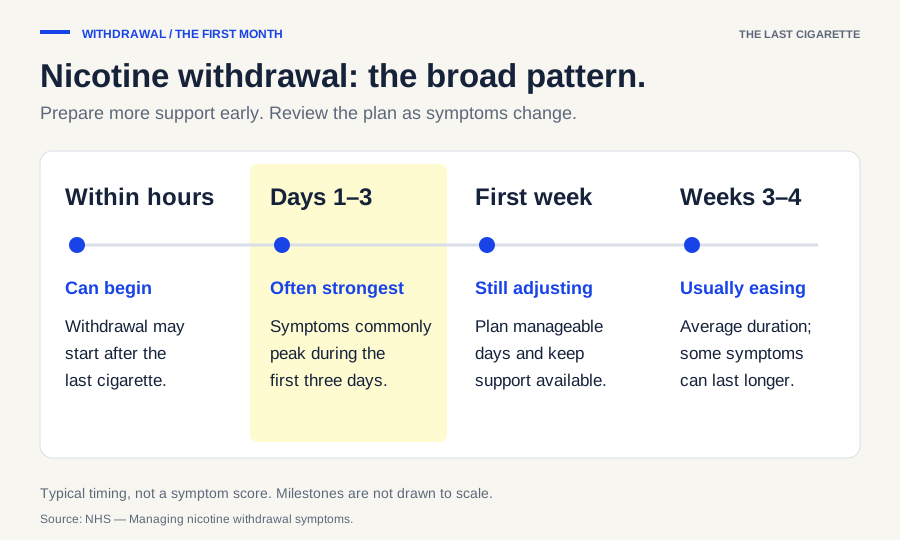
For everyday planning, make tomorrow gentler in one concrete way: an earlier coffee cutoff, a simpler task list, a prepared lunch or a check-in before the difficult evening. Pair it with the withdrawal timeline so you can prepare the coming weeks without treating a particular day as a deadline for recovery.
Sources & editorial notes
Published October 28, 2026. Linked public guidance and research checked on that date. Written by The Last Cigarette. Practical scenarios, illustrations and planning prompts are our editorial examples. Source dates below identify research publication, not a promise that an individual will follow an average.