THE SHORT ANSWER
Coffee can be both a learned smoking cue and a source of extra jitteriness after quitting. Alcohol can make it harder to follow your plan. Change the routine, arrange smoke-free company and decide what you will say before the offer arrives.
Break the sequence at a point you control
A trigger is not an instruction you must follow. It is a reminder that has become linked with smoking. Smokefree describes routine, emotional, social and withdrawal triggers, including coffee, parties and being around smoke. Smokefree: know your smoking triggers
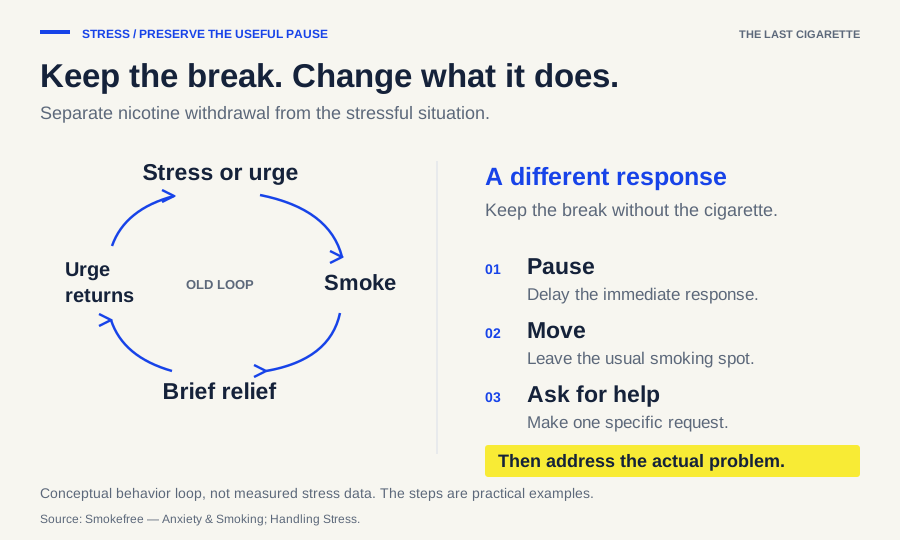
You cannot always remove the whole situation. You may still need to commute, finish dinner or see your friends. Look for one part of the sequence that you can change: the seat, the drink, the route, the person beside you or what happens immediately afterward.
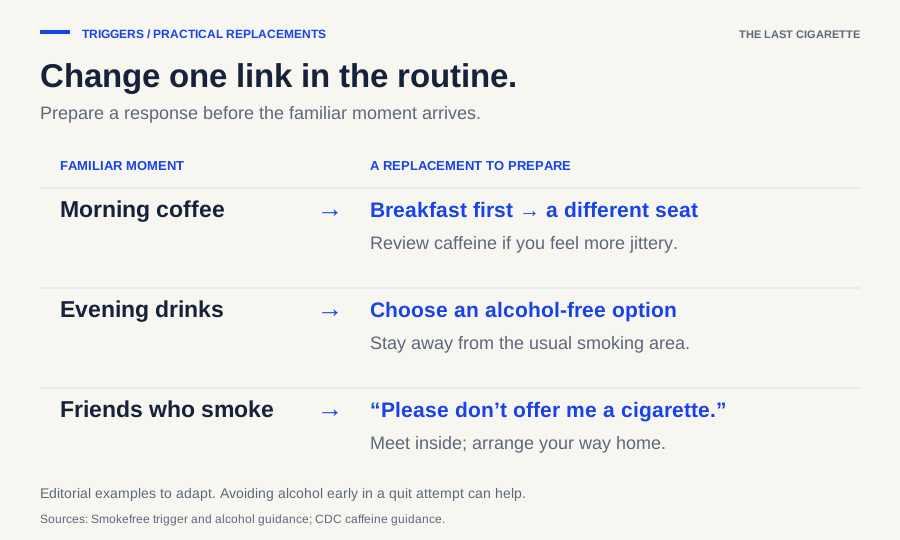
For example, if you always smoked while coffee brewed, start breakfast first and drink the coffee at the table. If you smoked outside after a meal, clear the dishes and take a walk from a different door. These are experiments in changing a familiar sequence, not universal rules.
Coffee has two separate roles
First, the cup may be a cue. You might want a cigarette because the two usually happened together. Second, caffeine can affect how you feel. CDC notes that caffeine remains in the body longer after you stop smoking. CDC: caffeine after quitting
Changing the mug or location addresses the learned routine. Reducing the amount, choosing decaf or moving coffee earlier addresses the caffeine side. You may need one change or both.
For three mornings, eat before coffee, drink a smaller cup at a different table and leave the house by the route that avoids your usual cigarette shop. Write down which change was worth keeping.
Do not turn coffee into another all-or-nothing challenge unless you have a reason to. The useful question is whether your current routine makes your quit attempt harder, and what small change improves it.
If medicine instructions restrict eating or drinking around nicotine gum or lozenges, include that timing in your morning plan. Ask a pharmacist about the product you use.
Alcohol changes the decision-making setting
Smokefree explains that alcohol can trigger smoking and make people more likely to act without thinking through the decision. Drinking settings may also bring you closer to people who are smoking. It suggests avoiding alcohol during the first few weeks of quitting. Smokefree: alcohol and smoking
For a planned event, the simplest early option may be an alcohol-free drink and company away from the smoking area. Decide before you arrive. It is harder to invent the plan after someone has opened a pack beside you.
If changing alcohol use is difficult or you drink heavily and regularly, ask a clinician for advice on changing safely. The advice here is about avoiding a smoking trigger; it is not a treatment plan for alcohol dependence.
You can still make a social plan: meet earlier, choose a café or activity, sit inside, arrange your own transport and give yourself permission to leave. An exit plan is useful even at an event you expect to enjoy.
Give friends a clear job
A general announcement that you are quitting can disappear into the conversation. A specific request is easier to act on: “Please don't offer me a cigarette, even if I ask later.” Or: “Meet me inside instead of taking me out for the smoking break.”
You do not need to turn a friend into your supervisor. Ask them to help change the setting. A supportive person can sit elsewhere, walk with you or interrupt the familiar invitation.
Prepare a short refusal you can say without explaining your whole history: “No thanks, I've stopped.” If someone presses, repeat it and move the conversation. Your response does not need to persuade them that quitting is important.
If your group always gathers around smoking, suggest one alternative with a date and place. “Coffee on Sunday at ten?” is more likely to happen than “We should do healthier things sometime.”
Design the first event as practice
Pick a manageable version of the situation. You might stay for an hour, arrive with a friend who knows your plan and avoid the part of the evening where everyone moves outside. You are practicing a different routine, not proving that you can withstand the hardest possible setting.
Before leaving home, answer four questions:
- Where am I most likely to be offered a cigarette?
- What will I say?
- Where can I move instead?
- How will I leave if the plan stops working?
Afterward, record the one moment that surprised you. Maybe the difficulty was waiting for your ride rather than the party itself. Next time, solve that detail. A useful plan gets more specific as you learn.
If the evening goes off plan
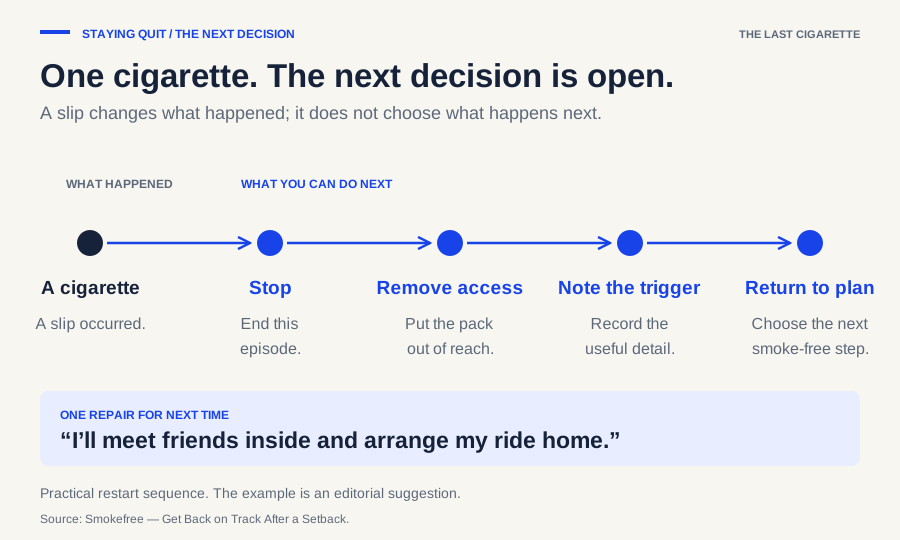
If you smoke, stop at the next decision and return to quitting promptly. Smokefree recommends identifying what caused the slip and changing your response. Smokefree: after a setback
“I went outside with the group” suggests a different meeting point. “I had no way home” suggests arranging transport. “I asked someone for a cigarette after drinking” suggests a clearer alcohol and support plan. Each is more useful than concluding that you cannot see your friends again.
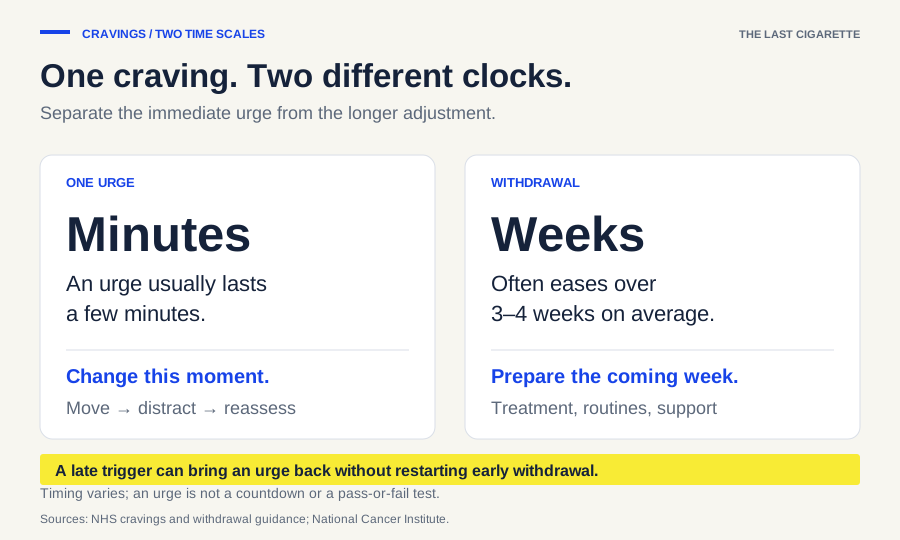
Read what to do after one cigarette if you need a restart now. For urges that appear without an obvious social setting, use the craving guide and keep your next action small.
Sources & editorial notes
Published October 28, 2026. Linked public guidance and research checked on that date. Written by The Last Cigarette. Practical scenarios, illustrations and planning prompts are our editorial examples. Source dates below identify research publication, not a promise that an individual will follow an average.