THE SHORT ANSWER
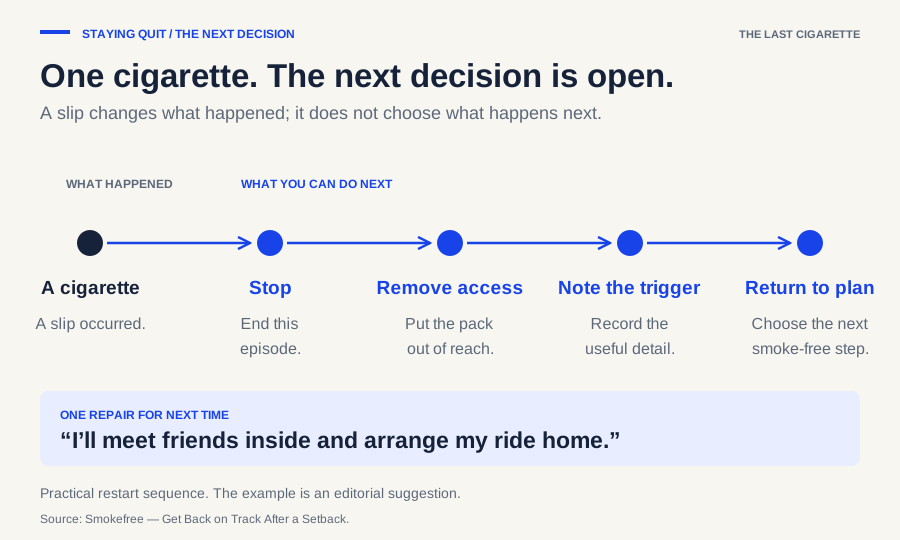
One cigarette does not erase the smoke-free time you have already had. Stop the episode, remove the remaining cigarettes and return to your quit plan promptly. Identify the trigger and change your response before meeting it again.
Do the next useful thing first
If you have just smoked, you do not need a complete explanation before taking action. Put out the cigarette, leave the smoking setting and remove the remaining cigarettes. Then decide what you will do for the rest of the hour.
Smokefree describes a slip as a temporary setback and encourages using it to learn. That does not make cigarettes harmless; it means the response should help you resume quitting rather than turn one episode into a reason to continue. Smokefree: get back on track
“You have not failed and you’re not back to square one.”
Smokefree, Get Back on Track After a Setback
The cigarettes you did not smoke still matter. So do the routines you changed and the information you gathered. Your next decision can use those things immediately.
Stop one cigarette from becoming a pack
The thought “I already ruined today” creates an unnecessary permission slip for the rest of the day. Replace the judgment with a practical question: “What would make the next cigarette less likely?”
That might mean leaving the party, changing the route home, asking a friend not to offer you more or disposing of the pack rather than keeping it for a theoretical emergency. Choose the step that removes immediate access.
Leave the smoking area. Remove the pack. Drink water and eat if you missed a meal. Contact your support person. Return to the next planned smoke-free part of your day.
You do not need to promise that the urge will never return. You need to avoid making access easy while you are deciding what happened.
If you bought a pack, the money is already spent. Smoking the rest does not recover it. Treat that purchase as a cost you can stop adding to.
Write the sequence without a character verdict
Both Smokefree and the NHS encourage identifying the trigger and preparing a different response. Smokefree: learn from a slip · NHS: after a smoking relapse
Write three details: where you were, what happened immediately before smoking and how the cigarette became available. “I was weak” answers none of those questions.
A useful note might read: “Stayed late at work, skipped dinner, went to the shop for food and bought cigarettes at the counter.” That points toward a meal plan, a different shop or support during late shifts.
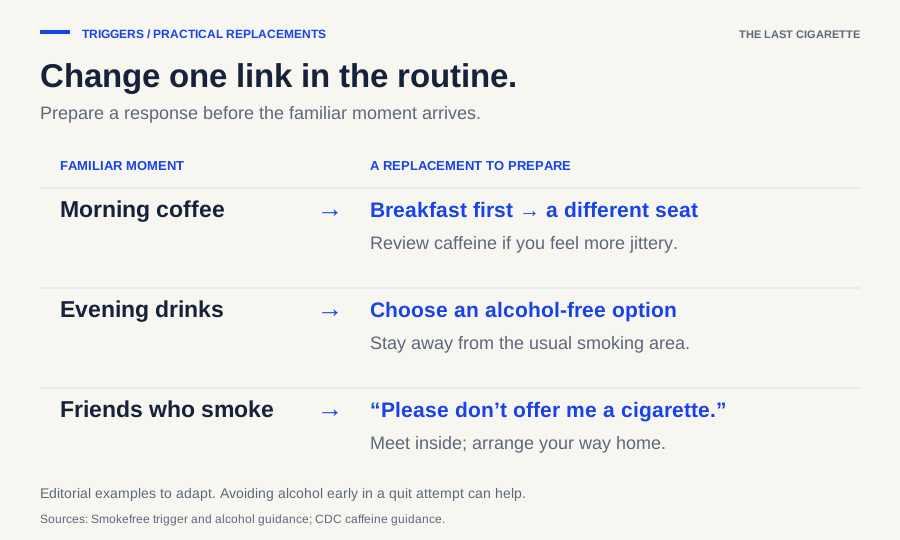
Another might be: “Everyone went outside after the toast and I followed.” That points toward a different place to stand and a prepared sentence for the invitation. The aim is to identify a change you can make before the next repetition.
Make one repair you can use next time
Do not respond by designing a much larger, harsher plan. If a missed meal and a late shift caused trouble, adding a two-hour morning workout may make the next day harder without touching the problem.
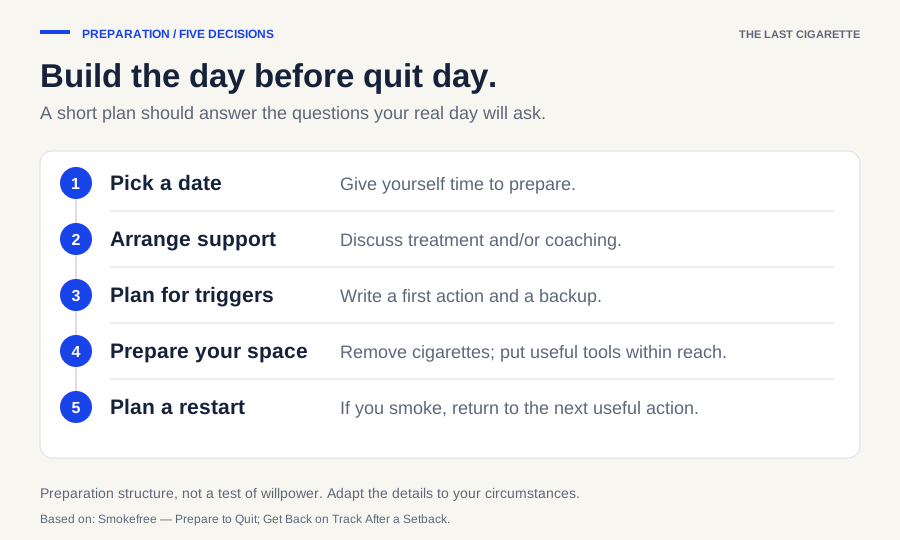
Choose one repair that fits the actual sequence:
- Access: remove the spare pack or avoid the usual buying route.
- Routine: arrange a different break or after-meal activity.
- Company: ask someone to meet you away from the smoking area.
- Support: arrange a check-in before the difficult time.
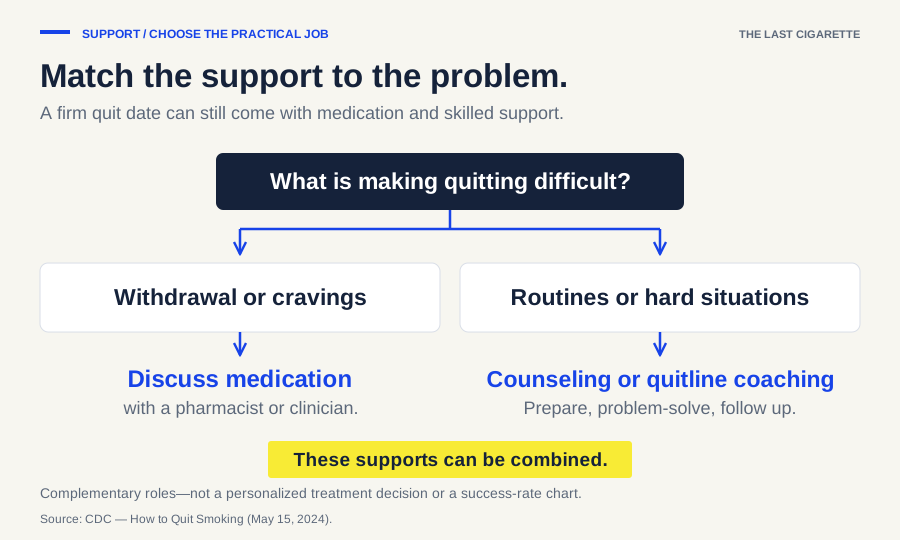
- Treatment: ask a pharmacist or clinician about cravings that remain difficult.
Write the repair in a sentence beginning “Next time…” and make it specific. Then prepare whatever it requires. A plan to call someone only works if you know whom to call and they are available.
What about your quit date, streak and medicine?
A counter is a tool. If resetting it helps you make a clear fresh start, do that. If you keep it, record the smoking episode honestly so the history remains useful. Do not let the display decide whether you continue quitting.
Medication instructions are a separate issue. CDC's nicotine-gum guidance, for example, says a smoking slip does not require stopping the gum; it advises getting back on track and continuing as directed. Follow the instructions for your own product and ask a pharmacist if unsure. CDC: gum and a smoking slip
Do not use one cigarette as a reason to discard a treatment plan without checking it. If you have returned to regular smoking or have side effects, contact the professional helping you and describe what has changed.
If you have started smoking regularly again
Smokefree advises restarting promptly rather than waiting for a distant, more impressive date. Review what helped during the smoke-free period and what needs more support now. Smokefree: restarting after regular smoking
You may need a different treatment, more coaching or a more realistic daily plan. CDC recommends combining counseling and medication for the best chance of quitting. CDC: quitting support
Bring useful evidence to the next attempt: “The workday was manageable, but evenings with alcohol were not.” That is a clearer starting point than “Nothing worked.” Read the trigger guide for that setting, or rebuild the next seven days with the quit-plan guide.
You can restart with what you know now. You do not need to wait until the disappointment has completely disappeared.
Sources & editorial notes
Published October 28, 2026. Linked public guidance and research checked on that date. Written by The Last Cigarette. Practical scenarios, illustrations and planning prompts are our editorial examples. Source dates below identify research publication, not a promise that an individual will follow an average.